







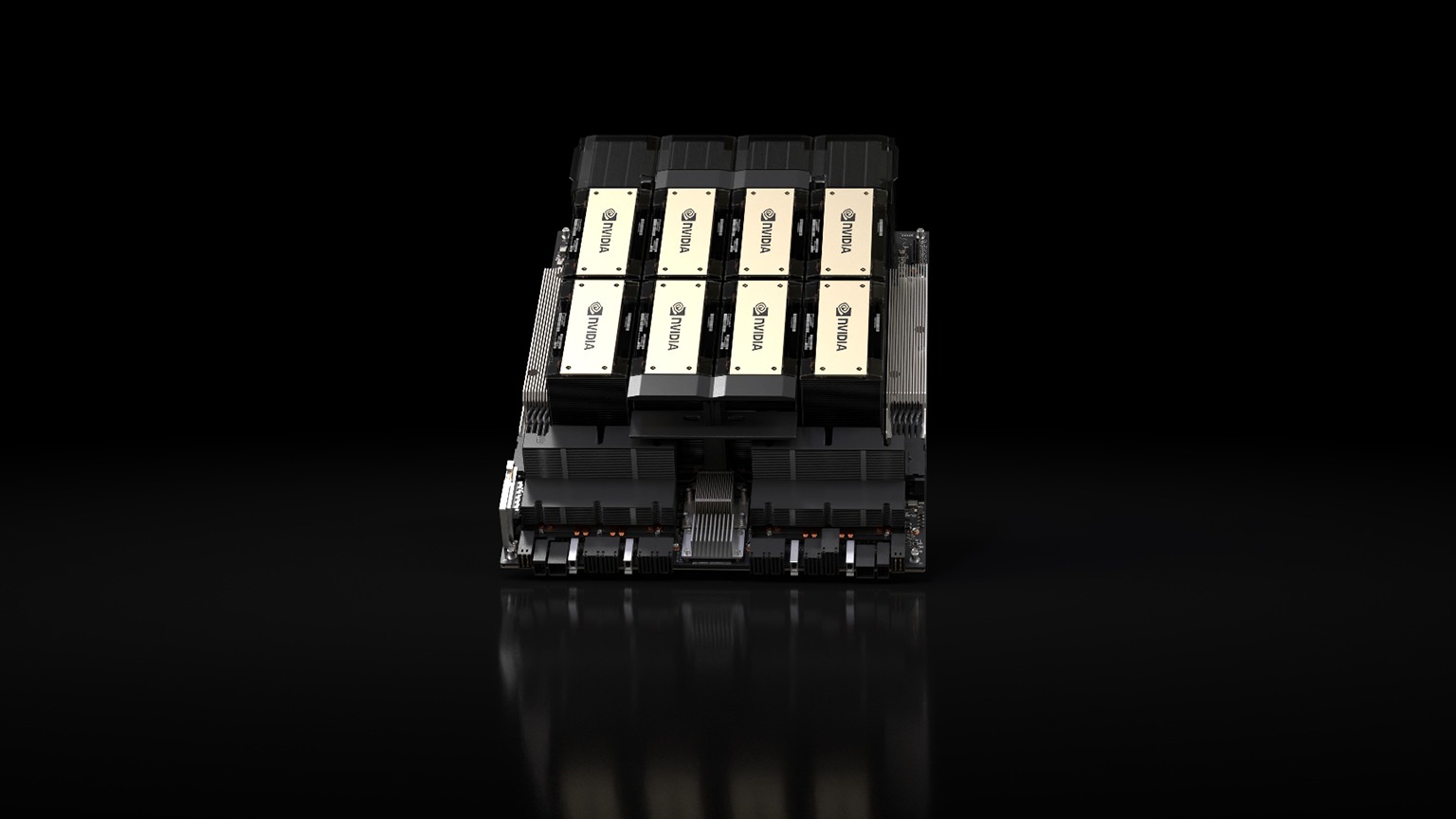
China has allowed small shipments of Nvidia’s H200 GPUs to enter the country and eased rules on AI developers using the chips, the Financial Times has reported.
Citing two people familiar with the matter, the paper said that a relaxed approach from the Chinese government over the past few weeks has seen Chinese tech giants ByteDance and Tencent each import approximately 10,000 H200 chips.
These chips, released in 2023, are several times less powerful than Nvidia’s current flagship offerings and were chosen by the US government as an acceptable level of advanced chip to sell to China.
The FT reported that while the Chinese government is still restricting Nvidia imports to the mainland, it has permitted AI developers to run clusters of H200 chips in Hong Kong, which operates under different customs rules.
Between October 2022 and December 2025, the US government blocked Nvidia from selling AI chips to China to limit the pace at which China can catch up to and compete with US AI developers.
This ban was lifted over fears that restricting access to US chips was redirecting Chinese spending to domestic semiconductor firms such as Huawei. In May, the Financial Times reported that Huawei expects its AI chip revenue to almost double to $12 billion this year.
Beijing has doubled down on this effect by holding Nvidia chips in customs indefinitely.
The limitations have driven Chinese developers at firms such as Alibaba, DeepSeek, Moonshot AI, and Z.ai to optimise their models for domestic chips and invent new memory compression techniques that allow large language models (LLMs) to perform well on less powerful hardware.
For example, DeepSeek is believed to use Huawei’s Ascend 910C chip for cheap inference across its products including its cost-competitive model DeepSeek V4 Flash. The firm is also reportedly developing its own AI chip to reduce third-party dependence.
But Huawei and in-house AI chip designs remain far behind the compute power and manufacturing capacity of Nvidia. As Chinese AI firms seek to train increasingly powerful AI models, a process much more compute intensive than inference, Nvidia chips could fill this compute gap.
AI labs benefit from training LLMs on Nvidia chips over those from other firms such as AMD or Huawei because developers in the AI space have optimised software libraries for Nvidia’s proprietary computing platform Compute Unified Device Architecture for over a decade.
The US government has previously accused DeepSeek of using smuggled Nvidia Blackwell chips, which are two to three times more powerful than H200s, to train its latest V4 Pro model.
Michael Kratsios, director of the White House Office of Science and Technology Policy, has also accused Moonshot AI of using illicitly sourced Nvidia GB300 Grace Blackwell chips to train its latest release, Kimi K3.
In March, the co-founder of US data centre company Supermicro and two other individuals were charged with smuggling $2.5 billion worth of servers containing Nvidia chips into China and in July, Singaporean prosecutors filed new charges against a suspect accused of defrauding server makers Dell, Supermicro, and Asus to divert Nvidia chips into China.
The same month, the FT reported that Nvidia halved its list of approved Asian customers to stop the smuggling of chips into China via countries such as Taiwan.


