






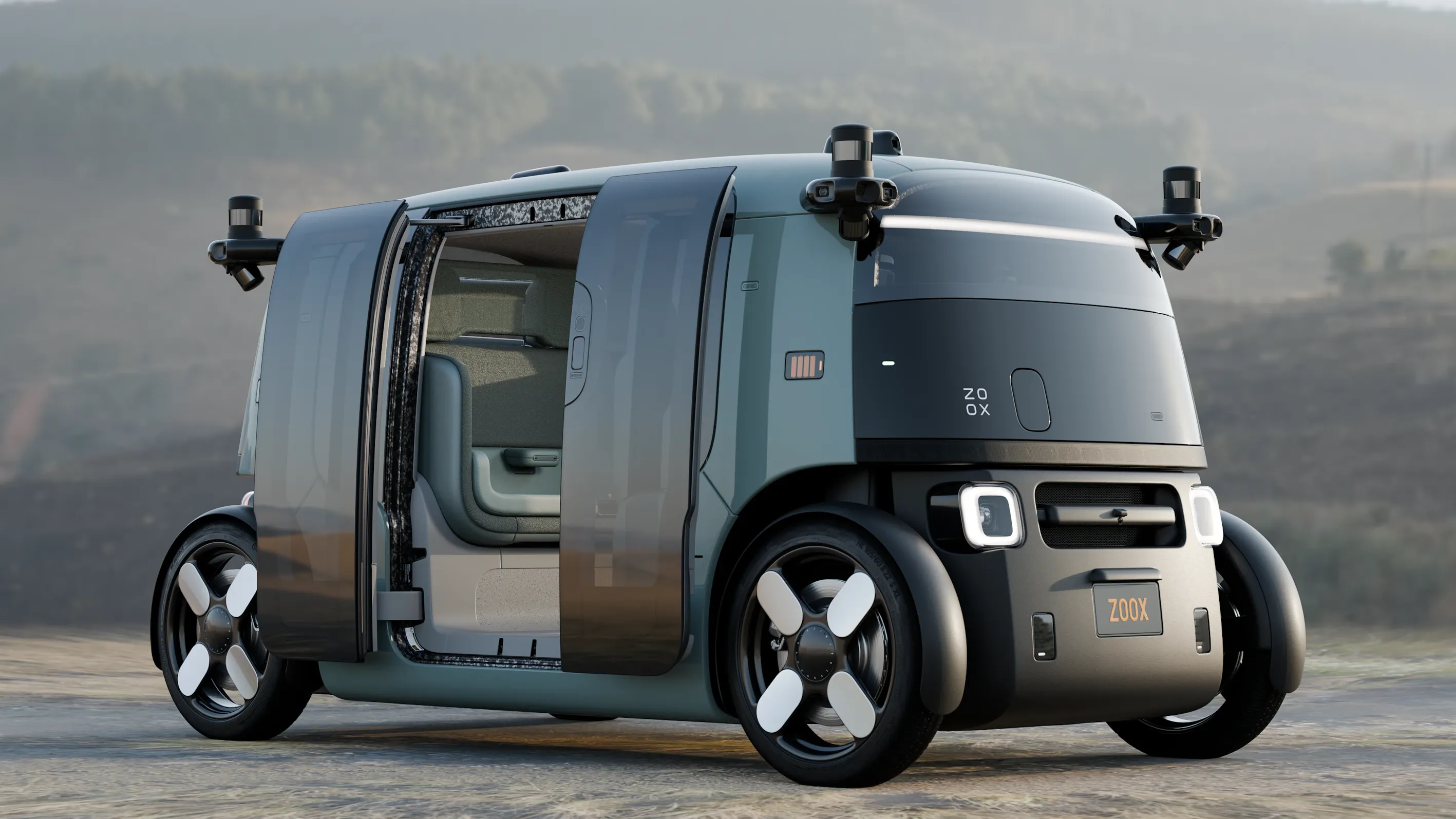
Amazon-owned Zoox has become the first autonomous vehicle company to secure US approval for limited commercial deployment of steering wheel-free robotaxis without human controls, allowing it to begin charging passengers under an exemption granted by federal safety regulators.
According to Reuters, the exemption from National Highway Traffic Safety Administration (NHTSA) rules requiring conventional driving controls permits Zoox to deploy up to 2,500 vehicles annually over the next two years.
The approval applies to the company’s purpose-built electric robotaxi, which features two rows of inward-facing seats, no steering wheel or pedals, and a top speed of 75 miles per hour. The vehicles cannot be sold to the public and commercial services remain subject to state and local approvals.
Jonathan Morrison, NHTSA administrator, said the agency concluded the vehicle met an equivalent level of safety despite exemptions from existing federal standards. “We can say pretty clearly that the systems in place on the Zoox exceed the equivalent performance requirements of a compliant vehicle,” he said. Morrison added: “But we still want to make sure that the automated driving system will operate appropriately.”
Reuters reported that the exemption carries additional reporting requirements covering incidents such as crashes or inappropriate stopping on public roads. Zoox must ensure all remote operators are based in the United States and publish maps showing where its vehicles operate. Morrison said regulators could withdraw the exemption if significant safety concerns emerge, stating: “We have the ability to pull the exemption if we see major safety issues.”
The decision marks a significant milestone for autonomous vehicle developers building purpose-designed robotaxis rather than adapting conventional cars to regulations written before self-driving technology emerged. Zoox joins competitors including Tesla and Alphabet’s Waymo, which are expanding autonomous ride-hailing services across the United States. Tesla has begun producing its steering wheel-free Cybercab but has not detailed its regulatory approval strategy.
According to Reuters, the approval follows increased regulatory scrutiny of autonomous vehicles after incidents involving interference with emergency responders, school buses and construction zones. Earlier this month, NHTSA instructed developers to address what it described as “a clear pattern” of driverless vehicles disrupting law enforcement and first responders. Zoox recently recalled 105 autonomous vehicles to update software after identifying a potential issue detecting heavy smoke during emergencies.
Morrison said NHTSA expects to introduce the first federal safety standards for automated driving systems before the end of the Trump administration while revising regulations originally designed for human-operated vehicles.


