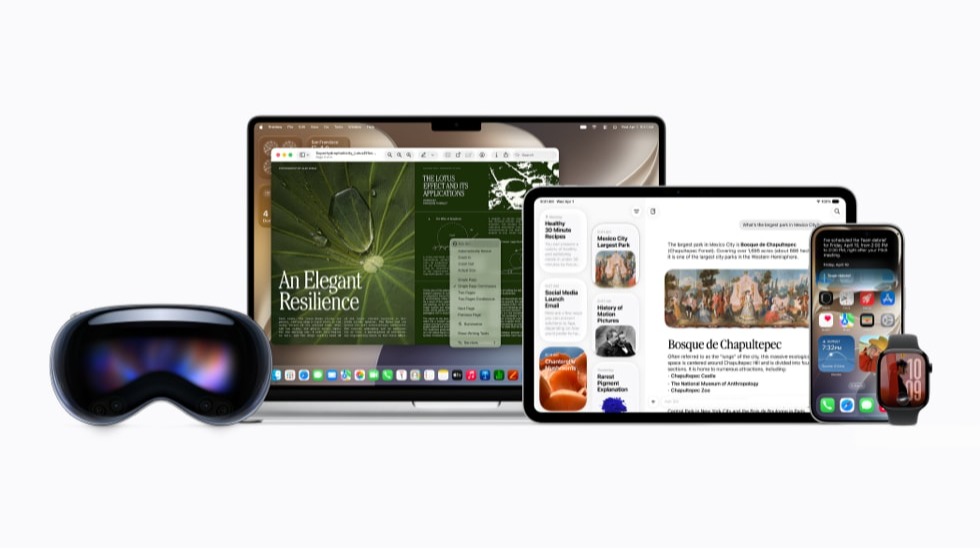
Apple unveiled a rebuilt AI-powered version of Siri and a broader expansion of its Apple Intelligence platform on Monday, as the iPhone maker sought to address criticism that it has lagged behind rivals in the race to develop generative artificial intelligence.
The announcement came at Apple’s Worldwide Developers Conference (WWDC) in California, where the company introduced “Siri AI”, a redesigned assistant integrated across iPhone, iPad, Mac, Apple Watch and Vision Pro devices. The new software is available for developer testing immediately and will enter consumer beta testing later this year for supported devices configured in English.
According to Apple, Siri AI has been rebuilt around generative AI technology and can draw information from personal emails, messages, photos and on-screen content while maintaining privacy protections. The company said the assistant will feature a dedicated app, conversational interactions and system-wide integration across Apple’s software ecosystem.
Craig Federighi, Apple’s senior vice-president of software engineering, said: “We believe that truly helpful AI must be centered around you and your needs.” He added that privacy was “non-negotiable” as Apple rolled out more advanced AI capabilities.
The launch marks a significant attempt by Apple to regain momentum after delays to its AI strategy. The company had struggled to deliver the enhanced Siri experience first outlined two years ago, but the company renewed its efforts by partnering with Google at the turn of the year to implement its Gemini AI models as a foundation for its Apple Intelligence.
Alongside Siri AI, Apple introduced new Apple Intelligence features across Messages, Safari and Shortcuts, including tools that can automatically update compromised passwords and create automated actions from natural-language instructions. The company also expanded Image Playground, enabling more customisable and photorealistic AI-generated images.
Apple devoted a substantial portion of the presentation to child safety. The company announced parental controls that allow guardians to approve websites individually, set category-based screen time limits and automatically blur messages containing violent imagery. Sumbul Ahmad Desai, Apple’s vice-president of health, said: “Parents are in the best position to decide what’s best for their family.”
The software updates form part of iOS 27, iPadOS 27, macOS 27 and other platform releases due this autumn. Apple said Siri AI will not initially be available on iPhones and iPads in the European Union, nor in China, while the company works through regulatory requirements.