









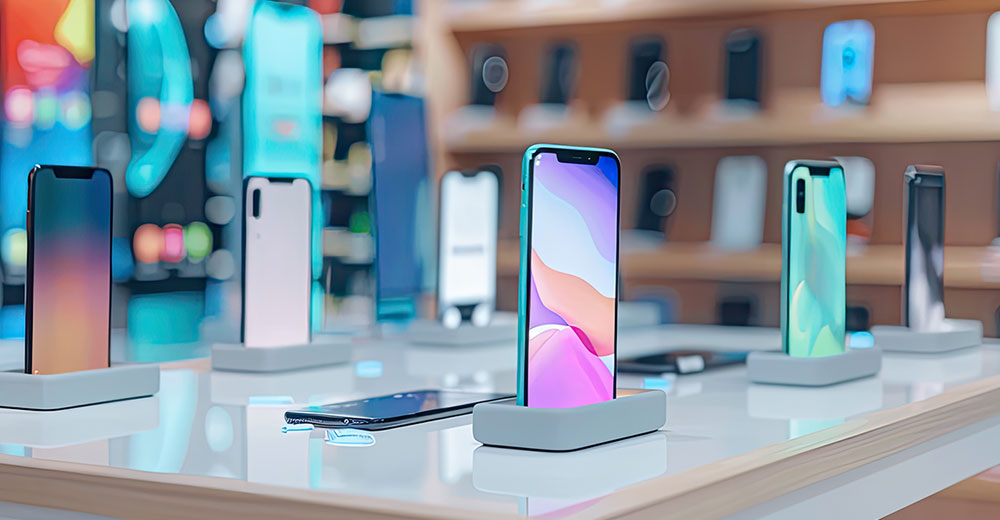
Free offers on the latest smartphone models don’t have the allure they once did.
According to a survey of more than 1,000 U.S. adults, more than one in four (28%) said that a Black Friday deal that offered a lower price on their phone plan was more appealing than a free smartphone with a new plan (14%) or a significant discount on a new phone (14%).
“A free phone still has appeal, but our findings suggest it isn’t the strongest offer for everyone,” said Jennifer Kyriakakis, chief marketing officer of OXIO, the telecom-as-a-service provider that conducted the survey.
“A lower monthly plan price was selected by twice as many consumers as a free smartphone with a new plan,” she told TechNewsWorld. “That doesn’t establish that device offers have lost their power, but it shows that ongoing service savings can be stronger for some consumers.”
“If someone is happy with their device, a free replacement may be less relevant than reducing a bill they pay for every month,” she continued.
“For mobile providers, the opportunity is to match the offer to the customer,” she added. “Device incentives can appeal to people ready to upgrade, while competitive monthly pricing can attract those who want to keep their phone and spend less on service.”
When Free Isn’t Free
Ross Rubin, principal analyst at Reticle Research, a consumer technology advisory firm in New York City, noted that free phone offers carry less weight during the holiday season because they’re offered throughout the year, especially in the fall when Apple and Samsung launch new models.
“Another reason is that consumers are holding onto their phones longer so they may not be as excited about upgrading,” he told TechNewsWorld.
“Consumers have caught on that free isn’t really free,” added Rob Enderle, president and principal analyst at the Enderle Group, an advisory services firm in Bend, Ore.
“A free phone usually means being locked into a high-priced, multi-year contract via monthly bill credits,” he told TechNewsWorld. “With recent inflation and economic uncertainty, consumers are much more focused on permanently reducing their recurring monthly financial overhead rather than taking a subsidized device that traps them with a specific carrier for up to three years.”
John Strand, CEO of Strand Consult, a telecom consulting firm in Denmark, noted that OXIO’s numbers are similar to what’s seen elsewhere, except the U.S. is one of the few major markets where mobile operators still subsidize a new smartphone.
“Right now, we see that certain customer segments are increasingly buying second-hand phones,” he told TechNewsWorld. “We also see that customers keep their phones for longer. That is also a global phenomenon.”
“In a world where smartphones have become very expensive for many people, and where it can be difficult for many to tell the difference between last year’s and this year’s model, many people are sticking with the phone they have,” he said.
“The numbers from the survey show that consumers have become more experienced and mature and that they know that they themselves pay for what is marketed as a free phone,” he added.
Satisfaction Doesn’t Guarantee Loyalty
The OXIO survey also found that 81% of respondents rated their satisfaction as an eight or above on a scale of 10. “That shows providers are meeting many customers’ expectations, but it does not mean those relationships are secure,” OXIO’s Kyriakakis cautioned.
“In the same survey,” she continued, “56% say a lower-priced plan could make them consider switching today.”
Brett Faulk, senior vice president and principal analyst at SmartTech Research, a technology advisory firm in Las Vegas, agreed that high satisfaction is encouraging, but that carriers shouldn’t confuse it with secure loyalty.
“Customers might be happy with their service but think another provider is better value,” he told TechNewsWorld. “Carriers will need to continue to earn the relationship, with 56% saying that lower pricing might make them switch.
“The finding that 49% experienced a monthly price increase during the past year makes transparent pricing and meaningful loyalty benefits particularly relevant,” he added.
Kyriakakis maintained that for carriers, satisfaction alone is not enough to protect against competition. “Customers can be happy with their service and still question whether they’re getting the best deal,” she warned.
“Providers need to keep demonstrating value through competitive, predictable pricing, meaningful rewards for loyalty and support customers can rely on,” she said. “That means giving existing customers a reason to feel valued, whether through lower prices over time, useful benefits or straightforward access to help when something goes wrong.”
“For MVNOs and new entrants, there is an opening to win consideration without waiting for consumers to become dissatisfied,” she added. An MVNO — mobile virtual network operator — is a company that sells mobile phone service under its own brand but uses another carrier’s physical network rather than owning cell towers, spectrum and core network equipment.
Why Shoppers Still Want a Store
Three out of four respondents said access to a store is important when choosing a mobile provider. Among those who valued store access, 39% cited easier face-to-face problem-solving as the reason. Technical support was the top reason respondents said they would visit a store (55%).
“Physical stores matter because a phone is also somebody’s banking, work and connection to their family,” noted Rich Pleeth, co-founder of Finmile, an AI logistics SaaS company in London.
“When a phone stops working, a person who can fix the problem is worth more than another promotional message,” he told TechNewsWorld. “I’d want a carrier to measure whether the shop resolves those problems, as well as how many new contracts it sells.”
People want somewhere to go when an essential device or service stops working, SmartTech’s Faulk contended. “Transferring a number, moving personal data, replacing a broken phone or resolving a billing problem can be easier with someone helping face to face,” he said. “That point is driven home by the fact that the number one reason people visit a store is technical support.”
“Stores can help carriers retain customers through problem-solving, as well as acquire them through sales,” he explained.
“As some carriers reduce their retail footprints and shift more interactions to digital channels, these findings are a reminder that efficiency needs to work for customers, too,” OXIO’s Kyriakakis added. “AI and automation can make routine tasks easier, but customers still value access to a person when they need help resolving a problem.”
Store access is particularly important to younger generations, she said, with 81% of Gen Z and 80% of millennials valuing it, compared with 72% of Gen X and 67% of boomers.
“The opportunity,” she concluded, “is to make digital and in-person support work together, giving customers a straightforward path to getting their problem resolved.”


