






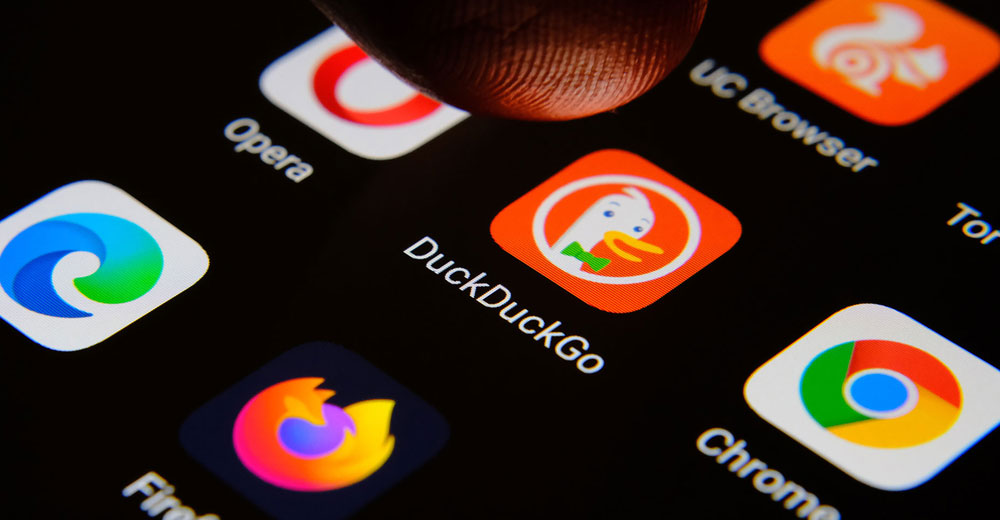
Google’s “new era for AI search” appears to be a boon for one of its competitors, DuckDuckGo.
Since Google announced last month that it would be changing its traditional search box into a conversational engine that uses artificial intelligence to answer questions rather than display pages of links, installs of DuckDuckGo have soared.
According to a post on the DuckDuckGo Bluesky account, installs on June 1 were 76% above the average before Google’s announcement, and the company broke its single-day search record.
It added that visits to its “No AI” search page have tripled since the Google announcement, and they continue to rise.
“It’s not a blip, it’s a movement. Fire Google,” DuckDuckGo wrote.
Reputational Gamble
Google’s handling of its new search rollout is a case study in how not to do a rollout, contended Johan Konst, founder of EUSA PR, a tech public relations agency in Amsterdam.
“You don’t announce ‘the biggest change since 1998’ and then give users zero say in it and give them no other choice,” he told TechNewsWorld.
“That’s not a product launch if you ask me, that is a reputational gamble,” he said. “The DuckDuckGo surge is not a coincidence. It’s a direct consequence of a bad communications strategy.”
“When you remove opt-out from a product used by 90% of the world,” he continued, “you don’t just frustrate users, you hand your competitors their best marketing campaign ever.”
“DuckDuckGo’s most effective marketing team right now isn’t at DuckDuckGo, but the policymakers at Google,” he said.
AI Search Momentum
However, Ross Rubin, the principal analyst with Reticle Research, a consumer technology advisory firm in New York City, argued that Google isn’t the kind of company to make changes to its flagship service in a cavalier way. “They’ve clearly been testing this for some time,” he told TechNewsWorld.
According to Google, its latest changes are being driven by the incredible momentum behind AI search. “Just one year after its debut, AI Mode has surpassed one billion monthly users, with queries more than doubling every quarter since launch,” Google VP for Search Elizabeth Reid wrote in a company blog.
“As people have realized just how much more Search can do for them, they’re searching more than ever before,” she continued, “so much so that last quarter, we saw queries reach an all-time high.”
Nevertheless, from a product perspective, it’s a mistake to force AI on people, contended Greg Sterling, co-founder of Near Media, a market research firm in San Francisco.
“Google is basically able to act with impunity because it’s a monopoly,” he told TechNewsWorld.
“Having said that,” he added, “I can tell you that people fundamentally like the flexibility of the AI experience and the fact that they can get immediate answers. But there is also distrust of AI. So users continue to embrace AI but with ambivalence.”
Growing AI Resentment
Although consumers were very enthusiastic about AI with the release of ChatGPT in 2022, there has been growing resentment toward AI over the past year, observed Kominos Chatzipapas, founder of Orion AI Software, a custom AI software developer in St. Petersburg, Fla. “I think that sentiment contributed greatly to the wave of traffic DuckDuckGo received,” he told TechNewsWorld.
“I feel the introduction of AI in Google search can be a positive development in the long run as hallucinations decrease, searchers become more accustomed to seeing AI overviews on search results pages, and Google finds a way to fairly compensate publishers to ensure a constant stream of good quality human content,” he added.
“People aren’t resisting AI. They’re resisting having AI forced into products they already use,” maintained Mohamed Yousuf, CEO of Smart Workforce AI, a workforce intelligence platform based in Toronto.
“Most consumers love AI when it saves them time or helps them solve a problem,” he told TechNewsWorld. “What they don’t like is losing control over how they access information.”
“The growth of DuckDuckGo is probably less about people rejecting AI and more about people looking for alternatives when they feel the experience they’ve become accustomed to is changing too quickly,” he said.
While some observers view the backlash as temporary, others argue the reaction reflects a broader concern about consumer choice and control.
Force-Feeding Necessity
Kadan Stadelmann, CTO and co-founder of Compliance.ai, an AI-powered regulatory compliance and risk management platform based in San Francisco, agreed that consumers show resistance to mandatory AI. “Consumers adopt technology when they believe they are in control of the adoption, retaining their autonomy and privacy,” he told TechNewsWorld. “Google’s rollout ignores these principles.”
“Consumers see Google’s decision as a threat against their freedom of choice,” he contended. “It’s not AI resistance. Instead, it is pushback against forced implementation without choice.”
However, he conceded that users will get into the habit of using AI for everything in the long term. “The internet of the last twenty years is changing forever,” he added.
Google’s force-feeding AI to its users may be a risky, but necessary, move. “Search is a habit-based product. People go to Google because it is familiar and fast,” explained Jesse Teske, founder of JCT Growth, a digital marketing and SEO agency in Roseville, Calif.
“When Google changes that experience too aggressively, some users will naturally look for alternatives like DuckDuckGo,” he told TechNewsWorld.
Betting on Future
Teske maintained that Google is making a long-term bet that AI will become a core part of how people interact with information online. “Even if there is short-term backlash, Google likely believes the future of search is AI-assisted and is willing to absorb some criticism to get there, which I think a lot of people and businesses are doing,” he said.
“Although people may be against it now, it’s clear that the trend toward AI is inevitable,” added Chris Coussans, founder of Visionary Marketing, an SEO and Google Ads agency in the U.K.
“If they didn’t embrace AI, the level of market share they’d lose to AI searches would only grow,” he told TechNewsWorld. “They’re angering some users, but the goal is to keep the pro-AI and the undecided on their side. They’re betting that the future population will side with AI search, not against it.”
Stephanie Harris, CEO and founder of PartnerCentric, a New York City-based marketing agency, noted that people are reacting to a shift in expectations.
“Search has always been a place where you feel in charge of what you click and what you trust,” she told TechNewsWorld. “If AI features feel transparent, grounded, and controllable, people adopt them quickly. If they feel like a new gatekeeper you can’t tune, the backlash is immediate, and that’s when alternatives benefit.”
“The main thing to understand is that consumers want choice,” added Teske. “They may use AI when it is clearly useful, but they do not want it forced into every interaction. It’s primarily about AI being added everywhere, whether they asked for it or not.”
“When you add concerns about accuracy, privacy, creative ownership, job displacement, and environmental impact,” he continued, “it becomes much easier to understand why some consumers are looking for alternatives.


