








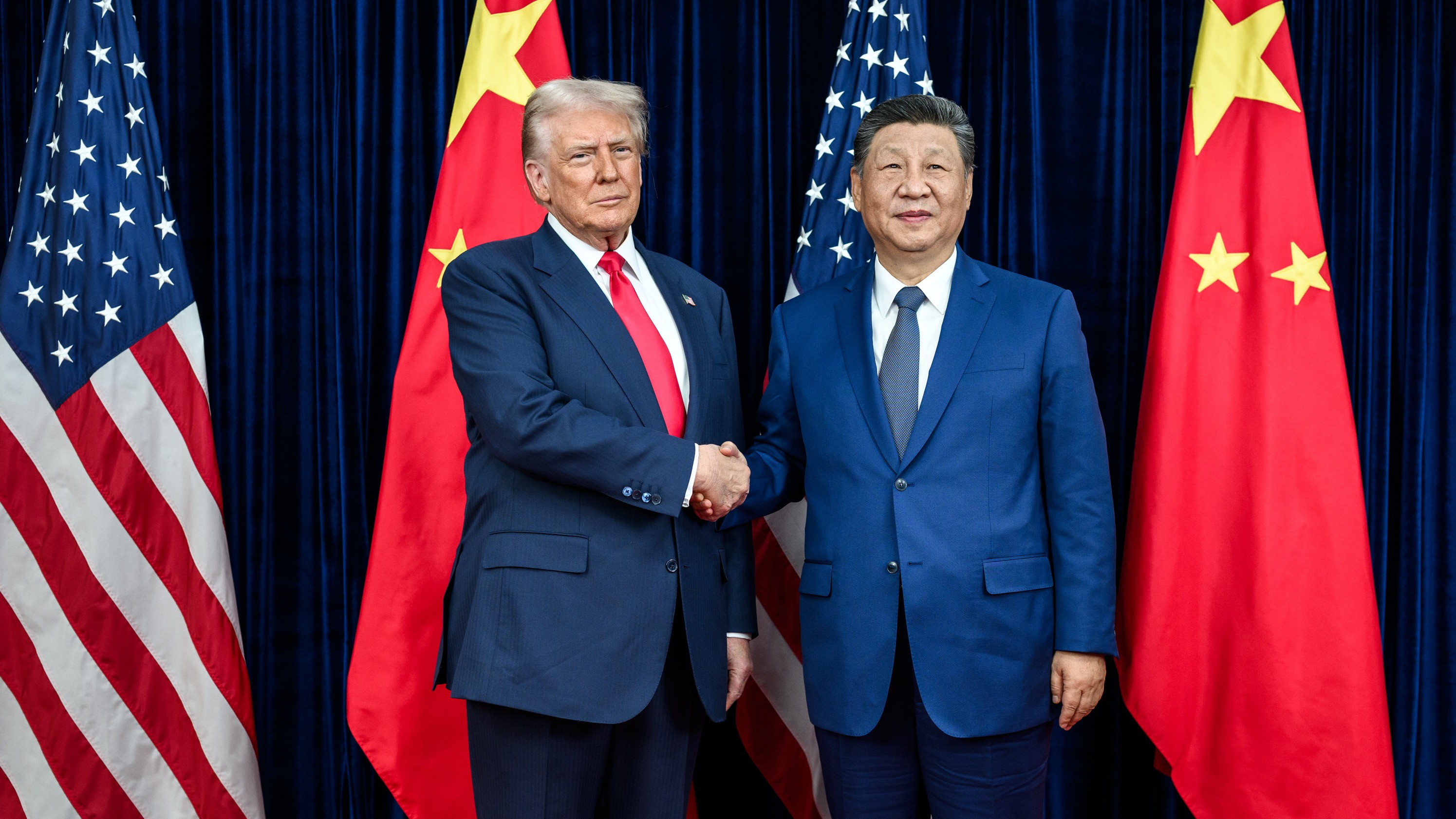
The US and China have agreed to establish a dialogue on artificial intelligence and discuss a mechanism for notifying each other about AI incidents with national security implications, ahead of Donald Trump and Xi Jinping’s summit in Washington this week.
US Treasury secretary Scott Bessent announced the plans on Sunday after talks with Chinese vice-premier He Lifeng in New York, saying greater transparency between the world’s two leading AI powers was important as the technology develops.
“We think that, just like with any cross-border activity, that moving from opaque to more transparency between the number one and the number two AI powers in the world is very important,” Bessent said, according to Reuters.
Bessent said the proposed notification mechanism would cover AI-related incidents that reach a national security threshold, while the wider dialogue would seek to establish “a shared vision of common goals and common threats”. The Chinese state news agency Xinhua said the talks included AI but provided no details on Beijing’s response to the proposed mechanism.
Reuters reported that US trade representative Jamieson Greer said the AI discussions would not cover US export controls on advanced AI chips or semiconductor manufacturing equipment. Greer said the talks were intended to prepare for a “successful summit” between Trump and Xi, who are due to meet in Washington on Thursday.
The discussions come as governments and technology companies face increasing scrutiny over the potential risks associated with advanced AI systems. Trump said earlier this month that “whoever wins in AI, wins”, while on Saturday he announced plans to appoint a new AI adviser and create an “AI force”, without providing details of how either initiative would operate.
Trump said the US would not “hinder or stifle” AI development, while stating that his administration would use existing criminal and civil justice systems to address harmful activity. The proposed adviser would be his second AI czar after venture capitalist David Sacks left the role earlier this year.
George Chen, partner and chair in Digital Practice at The Asia Group, told Reuters that continued US-China dialogue was significant but said cooperation could remain constrained by low levels of trust between the two countries.
Chen said future discussions could cover AI safety, the use of AI in weapons, critical infrastructure protection and preventing cyber attacks. He added that Beijing viewed US restrictions as an effort to contain China’s AI development.
The New York talks covered trade issues alongside AI, including plans to operationalise a “Board of Trade” process for identifying potential tariff cuts on non-sensitive goods. The US-China trade truce is due to expire on 10 November, with unresolved disputes including Chinese exports of critical minerals and commitments on purchases of US goods.
Trump is due to welcome Xi at Joint Base Andrews on Wednesday before their summit and a state dinner on Thursday, marking the first meeting between the two leaders on US soil since 2017.


